
Motorized Patio Enclosures for restaurants, bars, breweries, hotels and venues
One remote lowers every panel when wind, cold or sun moves in, so the patio stays open and the seats keep earning. Also called outdoor screens or patio wind blockers.
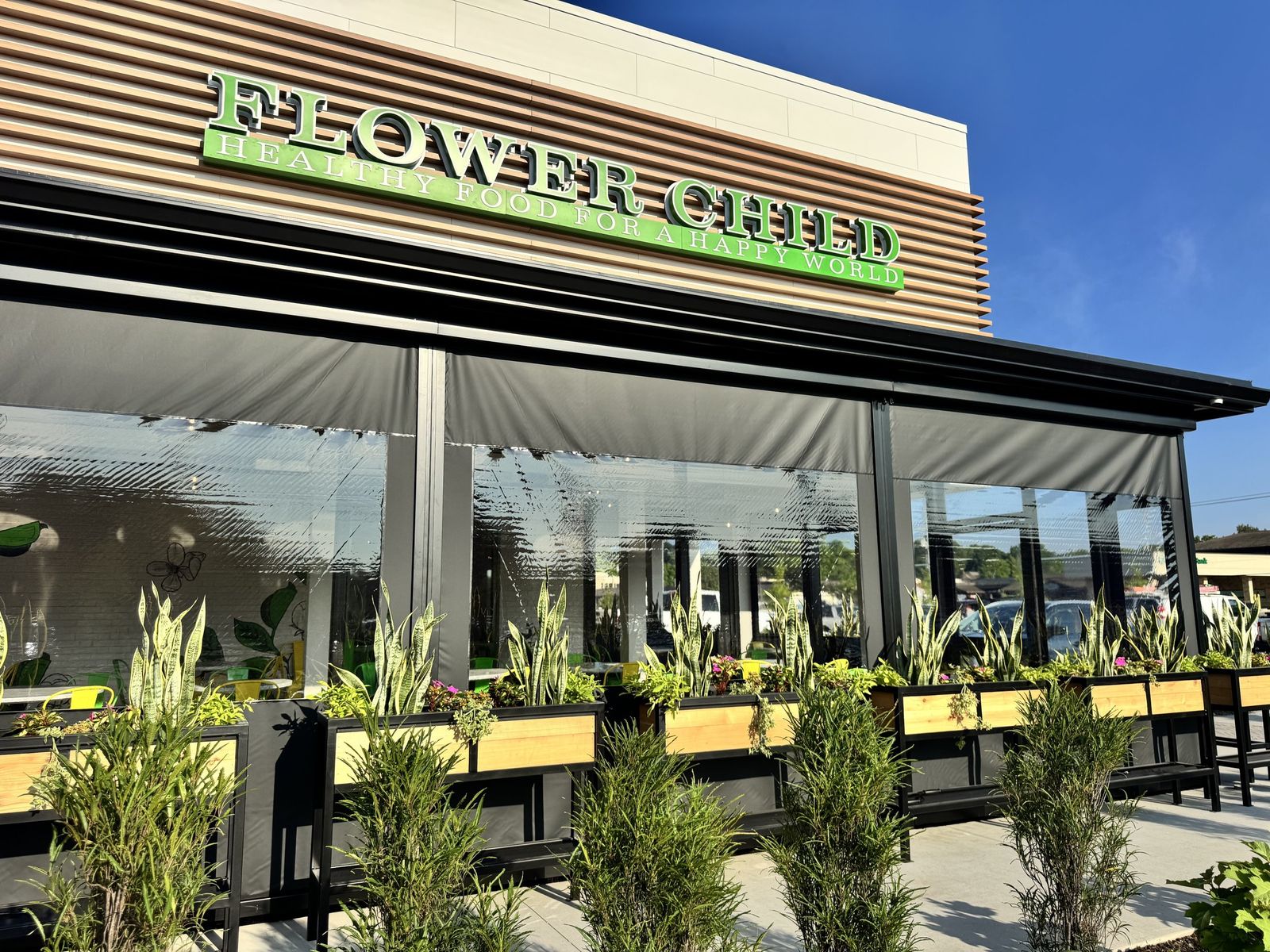
- 28 motorized sun shades on three patios at Hard Rock Casino Cincinnati, 2026
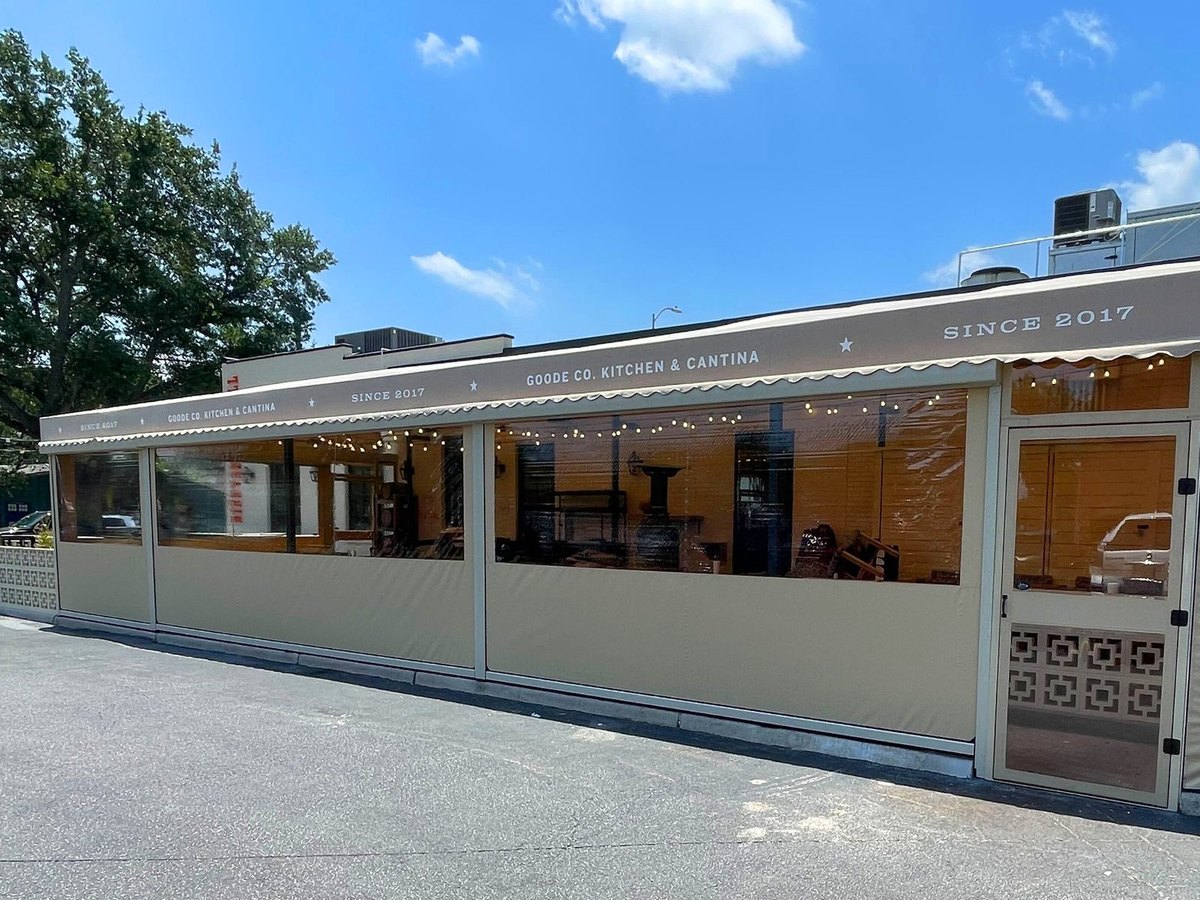
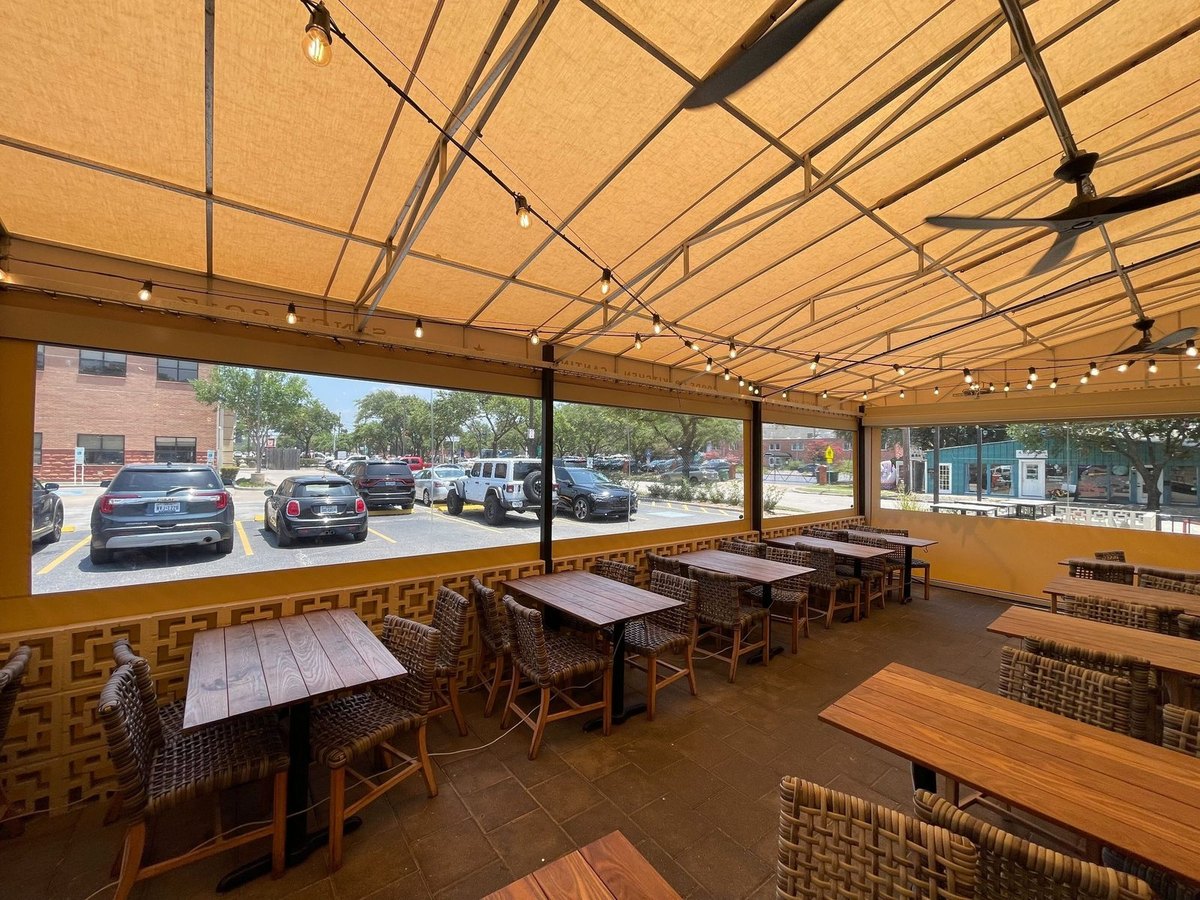
- Motorized for chains: 11 Willie’s Grill & Icehouse patios and 6 Perry’s Steakhouse patios
- Warrantied to 65 mph fully down, NFPA 701 flame retardant, installed by our own crews
Or call 512-782-8787. Commercial projects start at $10,000 installed.
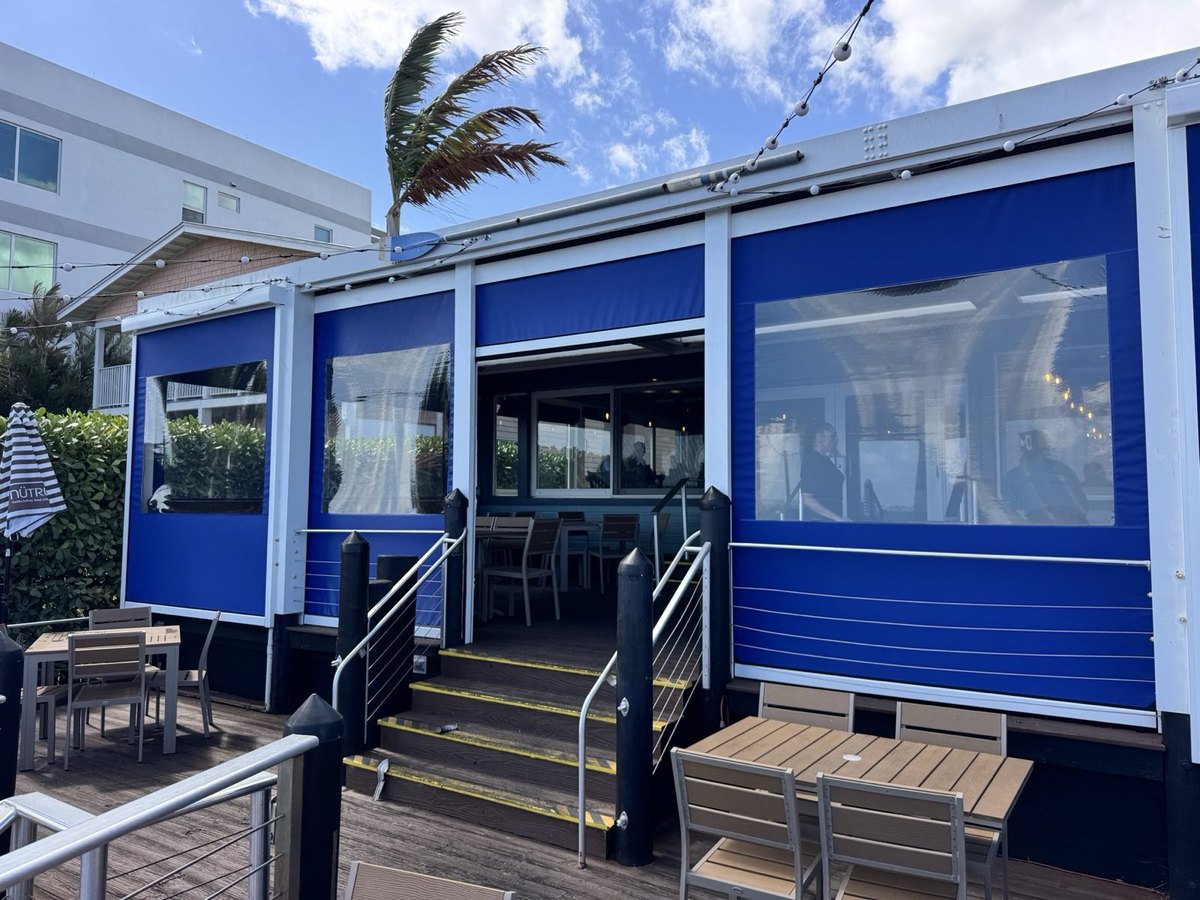
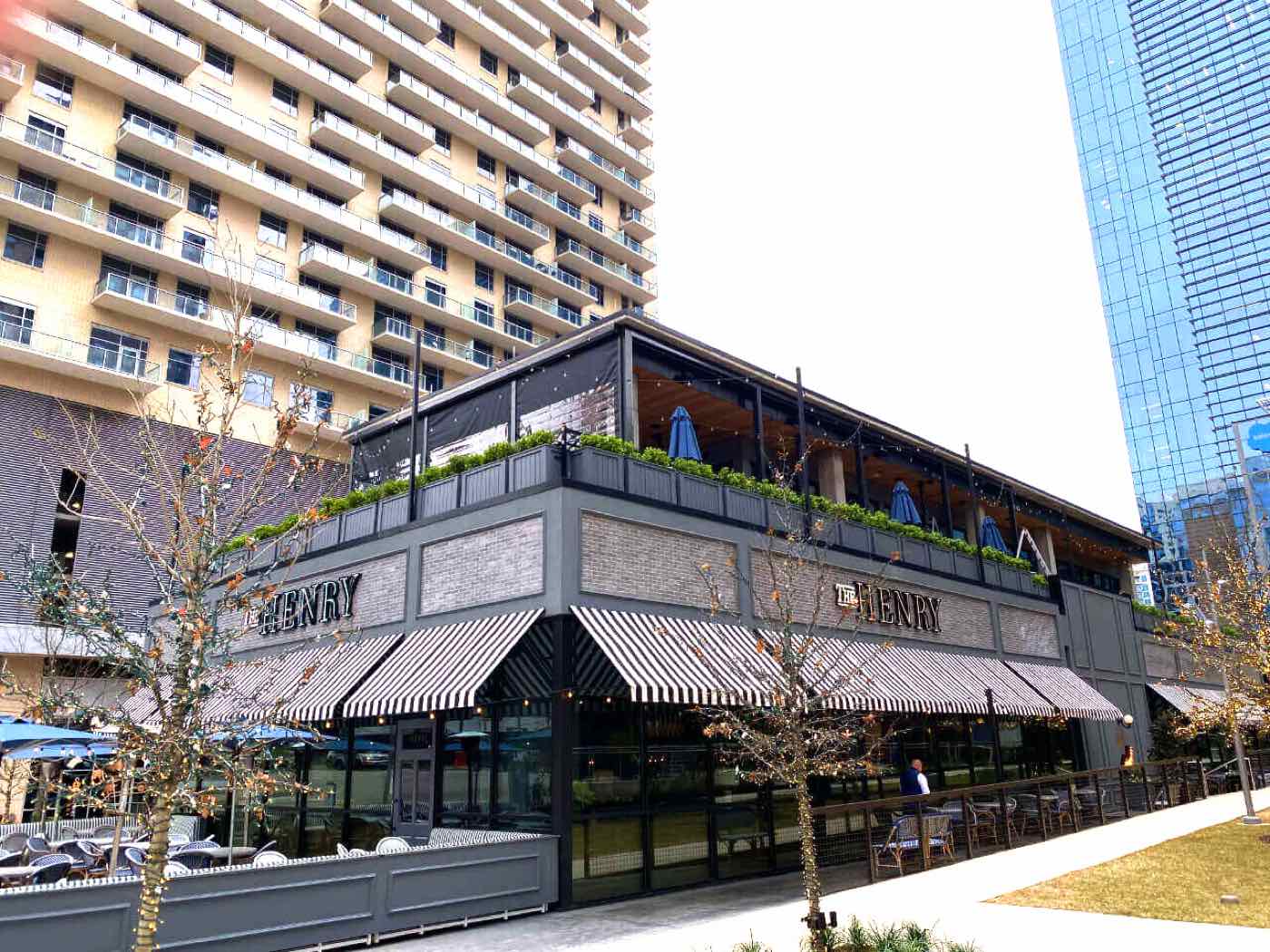
Why the Edges Are the Whole Game
A motorized panel is only as strong as whatever holds its edges. Ours ride in a keder track: the panel edge is welded around a continuous cord that slides inside a powder-coated aluminum channel, so the fabric is held for its full height on both sides. That is what a 65 mph warranty hangs on.
The shortcut is a cable edge — a wire the panel merely wraps around — or a zipper track that was never meant to carry wind load. Both let the panel pop free exactly when it matters.
The details a sail loft skips
Grommets, snaps, and sail-cover fasteners concentrate wind load at single points and tear through fabric. Full-width welting, zippers, and keder tracks spread that same load across every inch of the edge — which is why our ratings hold at commercial sizes.
Motorized: Video Guides
How the motorized system works and an overview of both systems side by side.
How Motorized Patio Enclosures Work | Commercial Remote-Controlled | Southern Patio Enclosures
How a motorized patio enclosure works: push a button on the remote and the panel rolls down out of its hood and locks into a track on both sides.
Read the transcript
0:00 CJ: Hey, I'm CJ, from the chat on our website. Here's how our motorized enclosures work.
0:06 CJ: Push a button, and the panel rolls down out of a hood and locks into a track on both sides.
0:13 CJ: Rolled up, it retreats into its hood.
0:17 CJ: Each unit gets its own channel on a sixteen-channel remote, and you can group channels. Keep the remote somewhere safe, and let only trained staff run it.
0:26 CJ: No ropes, no tie-downs. The edges ride in a keder track, and a weighted bottom bar with a brush seals the floor. Before you lower it, clear tables and chairs out of its path, or it can jam and need service.
0:40 JC: Hi, I'm JC. Fully down, every motorized unit has a sixty-five mile-an-hour warranty, and is tested well above that. Sixty-five covers every size we build, even our biggest units. Sun shade mesh with no clear window has been tested to a hundred and ten at our standard sizes. Down, fifteen miles an hour is nothing for them. That number is only about moving them: as a baseline, don't raise or lower them in wind over fifteen miles an hour. With clear vinyl, below forty-five degrees, wait to move them, unless your heaters are on and the clear is warmed up. Mesh is fine in the cold. Your exact limits for moving them depend on your unit's size, and our crew trains your staff when we install. Whoever runs them should know the local weather. Most days you can just leave them down. In an extreme wind event, the goal is to get your folks off the patio safely, before the weather gets too bad.
1:32 CJ: Standard units go up to twenty-five feet wide by sixteen high, or twenty-three by fifteen with clear vinyl.
1:39 CJ: Pick a standard window, fifty-four inches of clear at seated eye level, or MaxView, with nine feet of clear.
1:46 CJ: Clear vinyl keeps the view, solid vinyl removes it, and sun shade mesh cuts the sun.
1:53 CJ: It needs power: we give you the requirement during design, and your electrician roughs it in. We never do the electrical.
2:00 CJ: Questions about your patio? Ask me on the Southern Patio website.
2:04 Coach: Delivered and installed by our own crews. Never shipped.
On screen at the end: Ask CJ · southernpatioenclosures.com · 512-782-8787
Overview of Southern Patio Enclosures Products
A short tour of both systems we build -- manual rope-and-pulley roll enclosures and motorized screens -- and how each one suits a different patio.
Push a Button. Change the Season.
A motorized system — an automated patio cover, if you like — lets one trained person run every unit from a single remote. No ropes, no ladders, no pulling servers off the floor when a storm cell shows up on radar.
The panel rides in a keder track — a rope welt welded into the panel edge slides into an aluminum channel the way a mainsail slides into a mast track. It cannot pull out under load the way a zippered or cable-hung system can. Above it sits a reinforced roll tube; below it, a heavy-duty bottom bar. That combination is what lets us build standard single units up to 25 feet wide and 16 feet tall.
Every motorized system is delivered and installed by us — never shipped. The risk of transit damage on a motorized assembly is too high to accept.
At a glance
- Wind rating: warrantied to 65 mph fully down, and tested well above that; sun shade mesh with no clear window tested to 110 mph at our standard sizes
- Keder retention: near-100% stay-put assurance in all conditions
- Frame: powder-coated aluminum, no wearing parts in the track insert
- Opening size: standard units up to 25' wide by 16' high; 23' by 15' with clear vinyl
- MaxView glazing: clear panels to 23' wide and 9' high
- Operation: 16-channel remote, one channel per unit, top-down
- Fire rating: NFPA 701 flame retardant
- Installed nationwide, consistent across multi-site brands
Motorized Clear Vinyl Panels for Restaurant Patios
Call them motorized clear vinyl panels, electric patio curtains or an automated patio cover: it is the same system. A powered panel rolls down out of a hood and locks into an aluminum track on both sides. Choose clear vinyl to keep the view and stop the wind, Nano shade mesh to cut the sun and keep the air moving, or solid vinyl to hide the service alley. Whatever the fabric, every motorized unit is warrantied to 65 mph fully down, and tested well above that.
The Largest Clear Window Available on a Motorized System
Taking in a sunset, a skyline, or a courtyard is the entire reason your guests asked to sit outside. Most enclosures interrupt that view: ordinary vinyl needs opaque vertical seams and a wide horizontal band across the top just to hold its shape.
MaxView replaces those with a clear-to-clear weld that all but disappears. Clear panels run up to 23 feet wide and 9 feet high. Where a typical competing window tops out near 4 feet, yours runs the length of the opening.
The mechanism is simple. Pre-shrunk clear vinyl comes in 108" × 54" sheets, run horizontally. A standard window is one sheet tall — so the clear band is 54", no matter how wide the opening is. Openings wider than 10' just get a second sheet beside the first, still 54" tall.
MaxView stacks two sheets per 10' instead, welded clear-to-clear. Same frame, same opening — double the glass.
one sheet
two sheets welded
Ask your salesperson about openings that fall outside these dimensions — there is usually a way to get there.
Built for Wind
Every motorized unit carries a 65 mph warranty fully down, and is tested well above that; clear vinyl is the limiting factor. As Nano 97/99 sun shade mesh with no clear window, at our standard sizes, it has been wind tested to 110 mph — the configuration we specify for coastal exposure and for insurers with strong opinions.
Underneath the rating is material, not marketing. Clear vinyl runs double thickness to absorb the stresses ordinary and extraordinary weather put on it. Solid vinyl is architectural grade: three times the strength of standard fiberglass, and it loses roughly 1% of its original strength after seven years of weathering.
Ripstop construction means a cut in a colored border or shade panel stops where it started. It will not run the length of the panel and it will not fray — which is the difference between a scuff and a replacement.
Why it holds
- Keder welt captured in an aluminum C-channel, not a zipper or cable
- Extruded aluminum side tracks
- Reinforced roll tube across the top
- Heavy-duty bottom weight bar, plus a double bar on smaller shades
- 1½″ bottom bar brush seals to the deck
- Reinforced fabric flag corners at the highest-stress points
- No tie-downs required, unlike manual systems
It Disappears When You Are Not Using It
Rolled up, the system retreats into its hood — or recesses fully into a wall or overhead structure, leaving the architecture exactly as it was drawn. Nothing hangs, nothing sags, nothing announces itself.
Deployed, the panels track straight and level, and keep doing it through years of daily cycling. A hood and housing brush clears debris as the panel travels, so the system cleans itself a little every time you use it. Three housing sizes cover shades from 3 to 25 feet wide, and the hood powder-coats to match whatever the rest of the patio is wearing.
Sloping patios are not a problem. Neither are columns, beams, or an opening that is three inches out of square — we field-verify every dimension before fabrication.
Retractable: Up When You Want the Open Air
A retractable patio enclosure should vanish on a good evening and come down from a remote when the weather turns. Ours roll up into a hood, or recess into a wall or overhead structure, and come back down into the same side tracks. Use Nano shade mesh for sun, clear vinyl for wind and cold, or both on one opening, in standard units up to 25 feet wide by 16 feet high (23 by 15 with clear vinyl). If the patio only closes a few times a season, manual roll-down panels may be the better buy.
Three Fabrics, One Opening
Clear vinyl keeps the view. Solid vinyl removes it — useful against a service alley, a dumpster corral, a neighboring building, or anything you would rather your guests not study over dinner. Nano shade mesh sits between the two: guests see out, passersby cannot see in, air still moves through, and the fabric blocks up to 97% of UV.
Most patios use more than one. We will help you decide where each belongs based on orientation, sightlines, and what the sun actually does to that specific patio at six o'clock in August — not on a rule of thumb.
Solid vinyl comes in fifteen colors, and Nano 97 shade fabric in thirteen more. Aluminum housing and tracks powder-coat in eight standard colors. Every fabric we sell is flame retardant, so it can go on any commercial patio.
Choosing the mix
- Clear: protect the view you sell — water, skyline, courtyard
- Solid: block what you would rather guests not see, permanently
- Nano shade: one-way daytime privacy, airflow, up to 97% sun blocked
- Combine all three in a single opening
- Color-matched to your brand palette, not ours
- Seams welded vinyl to vinyl, never stitched
Automated Controls and Power
Each automated panel runs on a standard 120 V tube motor. Each unit runs on its own channel of a 16-channel remote, and channels can be grouped. Keep the remote somewhere safe, and let only trained staff run it. The motors are Somfy-compatible, so they work with Somfy's automation accessories, such as timers, sun and wind sensors, and app or smart-home control. It is all wireless. Older systems were wired and needed a lot of hardware; today's run on radio, so there is no control wiring to run. The design consultation sets up what fits your patio. Motorized panels do need power, and we never do the electrical: we give you the power requirement during design so your electrician can rough it in before we arrive. The technical detail is in our motorized FAQ.
Installed by the People Who Build Them
We install with our own crews, based in Central Texas, and our Texas crew travels anywhere in the country. On multi-site programs that matters more than it sounds: location forty-one gets installed to the same standard as location one, because it is the same standard and often the same people.
We stopped subcontracting installation and service years ago. Every install and every service call is handled by SPE crews, which is the only way we found to keep quality consistent across markets. Where a general contractor is running the wider project, we coordinate directly with them on scheduling, site access, and sequencing.
Motorized systems are delivered by us rather than freighted. Manual systems ship where that makes sense, but a motorized assembly rides on our truck.
Where Motorized Makes the Most Sense
Motorized earns its premium on patios that get closed and opened often, patios that are too large to hand-roll, and patios where staff time during a weather change is genuinely expensive. Typically that means:
- Restaurants and cafés expanding seating into shoulder seasons
- Hotels, resorts, and rooftop bars where the patio is a booked, revenue-generating room
- Event venues, clubs, and breweries that reconfigure the space week to week
- Country clubs and golf course patios facing high wind exposure
- Multi-site restaurant groups standardizing one specification across markets
On smaller patios, or where the enclosure comes down twice a season rather than twice a week, a manual roll-down system often delivers the same weather protection for a materially lower investment. We will tell you which one your patio actually needs.
Motorized Systems Are Not All the Same
The differences that matter show up on a windy Friday, not in a brochure.
| Feature | Southern Patio Enclosures | Typical competing system |
|---|---|---|
| Wind rating | Warrantied to 65 mph fully down on every motorized unit, and tested well above that; sun shade mesh with no clear window tested to 110 mph at our standard sizes | Varies by maker |
| Retention | Keder system — panel edge held in track, near-100% stay-putAllows a higher wind rating | Zipper track or cable, varies by makerCable systems gap at the sides, letting in wind, rain, and debris |
| Frame | Powder-coated aluminum — long-lasting, secure in wind | Varies by maker |
| Opening size | Standard units up to 25' wide by 16' high (23' by 15' with clear)Reinforced tube allows wider and taller panels | Roughly 12' wide and 12' highUnreinforced tube limits both dimensions |
| Clear window | MaxView to 23' wide and 9' high | Around 4' high — more seams, less view |
| Fabric | Vinyl — handles weather and friction | Cloth — even premium canvas typically lasts about 5 years |
| Seams | Welded vinyl-to-vinyl, see-through clear-to-clearNever stitched, reinforced at stress points | Stitched or welded, varies by maker |
| Service | Nationwide, after the sale — multi-site brands standardize across locations | Regional only — cannot standardize across markets |
Talk to your salesperson about options for openings taller or wider than the sizes listed above.
Motorized Enclosure Details
- Price rangeProjects start at $10,000 installed. About $4,500 to $7,500 per unit for materials and fabrication; installation is quoted by location. Most motorized clear patios run about $30,000 to $60,000 installed.
- Lead timeAbout 8 weeks from deposit; we aim to beat it.
- Wind ratingWarrantied to 65 mph fully down on every motorized unit, and tested well above that. Sun shade mesh with no clear window is tested to 110 mph at our standard sizes.
- Standard max size25' wide by 16' high; 23' by 15' with clear vinyl
- Clear windowStandard is one 108"×54" pre-shrunk sheet — a 54" clear band. MaxView stacks two sheets, to 23' wide and 9' high.
- Flame retardancyNFPA 701 certified
- OperationMotorized, top-down, 16-channel remote with one channel per unit; channels can be grouped
- MaterialsClear vinyl, solid vinyl, or Nano shade mesh — or any combination
- Frame finishPowder-coated aluminum in eight colors: White, Black, Bronze, Slate Gray, Sandstone, Almond, Sierra Tan, and Taupe
- Warranty3-year workmanship, 5-year motor
- DeliveryDelivered and installed by our crews. Motorized systems are never shipped.
Pricing varies with opening size, fabric mix, door type, site access, and travel. We measure on site before anything is built, and if the price changes, we'll tell you first.
What Operators Tell Us
I purchased the enclosure system from Southern Patio five years ago and it is as great today as it was 5 years ago. The sales and service department are professional, efficient …Customer review
Have used SPE for several projects now. Service, support, and care are a priority for these people. Cant say enough about Jay, Ashley, Mark, Floridon, Brian and team. Excited to work with them again!!Customer review
It's ridiculous how professional, competent, and considerate every person in the company was… I am blown away that the quality of the product also matches the quality of the people and operations of the company.Customer review
The Detail List
- Keder retention track: a rope welt on the fabric edge rides in an aluminum channel
- All-aluminum track insert, no wearing parts
- Sun shade mesh with no clear window tested to 110 mph at our standard sizes; every motorized unit warrantied to 65 mph fully down, and tested well above that
- Flexible inner track for proper deployment
- Heavy-duty weight bar, double bar on smaller shades
- 1½″ bottom bar brush
- Reinforced fabric flag corner for additional strength
- Three housing sizes, shades from 3' to 25' wide
- Hood and housing brush for self-cleaning
- Eight standard powder-coat colors
- Hood styling to match the surrounding decor
- Handles sloping patios
Motorized Enclosure Questions
How do you get a proper seal to hold heat or air conditioning?
Three things work together: extruded aluminum side tracks that capture the panel edge, a brush along the bottom of the weight bar that seals to the deck, and a protective hood at the top. The result is a genuine envelope rather than a windbreak, which is what makes patio heating and cooling economically sane.
How do the panels stay put in high wind?
The side tracks are extruded aluminum with a C-channel. The panel edge carries a keder welt that seats inside that channel and cannot pull free the way a zipper or cable can. A heavy rigid bottom bar and a reinforced top tube handle the rest. Every motorized unit is warrantied to 65 mph fully down, and tested well above that. Sun shade mesh with no clear window is tested to 110 mph at our standard sizes. No tie-downs required.
How long does a motorized system last?
Ten years or more with routine maintenance. The hood shields the panels whenever they are rolled up, and because there are no tie-downs there is far less handling wear than a manual system sees. We offer maintenance packages for operators who would rather not think about it.
What is the largest opening you can cover?
Our standard units run up to 25 feet wide by 16 feet high, or 23 by 15 feet with clear vinyl. MaxView clear glazing runs to 23 feet wide and 9 feet high. Larger or unusually shaped openings are usually solvable by splitting the run into multiple units; send us photos and dimensions and we will tell you honestly what is possible.
Can we install it ourselves?
No. Motorized systems are delivered and installed by our crews. A motorized assembly is heavy, the track alignment is unforgiving, and the failure modes are expensive — so we do not ship them or hand them off. We do not subcontract installation at all — it is our own crews on every job. Where a general contractor is running the project, we coordinate with them on schedule and site access.
What happens if a panel is damaged?
Ripstop construction stops a cut from spreading, so most damage stays cosmetic and local. Individual panels can be replaced without touching the housing or motor. Service requests route through one channel nationwide, and many issues resolve over the phone.
How are the panels controlled?
By a 16-channel remote. Each unit gets its own channel, and channels can be grouped. Clear tables and chairs from the path before lowering. The units also work with Somfy's wireless automation accessories, such as timers, sun and wind sensors, and app control, and the design consultation sets up what fits.
What is the warranty on motorized panels?
3 years on workmanship and 5 years on the motor. Service requests go through one channel nationwide, and many issues are solved over the phone.
What power do they need, and do you do the electrical?
Standard 120 V tube motors. We never do the electrical: we give you the power requirement during design, and your licensed electrician or general contractor runs the power before we arrive.
How long does it take to get them?
About 8 weeks from deposit; we aim to beat it.
What does a motorized restaurant patio cost?
Projects start at $10,000 installed. Materials and fabrication run about $4,500 to $7,500 per unit, and installation is quoted by location. Most motorized clear patios run about $30,000 to $60,000 installed. See what a commercial patio enclosure costs, or price your openings in Build & Price.
Can we run patio heaters inside a motorized enclosure?
Yes. Keep every heater at least 12 inches from the vinyl, or farther if the heater maker's clearance calls for more. Motorized panels travel in their side tracks, so they do not swing into a heater as they go up or down. We confirm heater spacing at the design consultation.
Can one remote run the whole patio?
Yes. Each unit has its own channel on a 16-channel remote, and channels can be grouped, so one person can lower a single panel, one side or the whole patio from the same remote. Keep the remote somewhere safe, and let only trained staff run it.
Ready to price a motorized enclosure for your patio?
Send us the opening dimensions and a few photos. We will tell you what the system costs, what it will hold, and how quickly we can have it installed.